Hybrid office design is the key to a flexible and inspiring workplace. Hybrid work is here to stay. Whereas employees used to spend five days a week in the office, more and more companies are combining remote work with on-site work. This calls for a fresh approach to office design. How do you create a workplace that is flexible, efficient, and inspiring?
A well-designed hybrid workspace gives employees the freedom to choose where and how they work, without compromising on collaboration and productivity. In this blog, you’ll discover how hybrid work is completely transforming the way offices are designed—and how you can adapt to this new reality with smart solutions.
Why hybrid work is a game-changer for office design
Hybrid office design is transforming the way we organize workspaces. The days when everyone had a fixed workstation are over. Employees are combining remote work with on-site work, which means offices need fewer individual desks and there is greater demand for flexible workspaces, modern meeting rooms, and inspiring social areas.
Smartly designed offices respond to this shift, not only ensuring a more efficient use of space but also boosting productivity and employee satisfaction. A well-designed work environment should inspire, facilitate, and offer flexibility.
The 5 Key Trends in Hybrid Office Design
1. Flexible workspaces instead of fixed desks
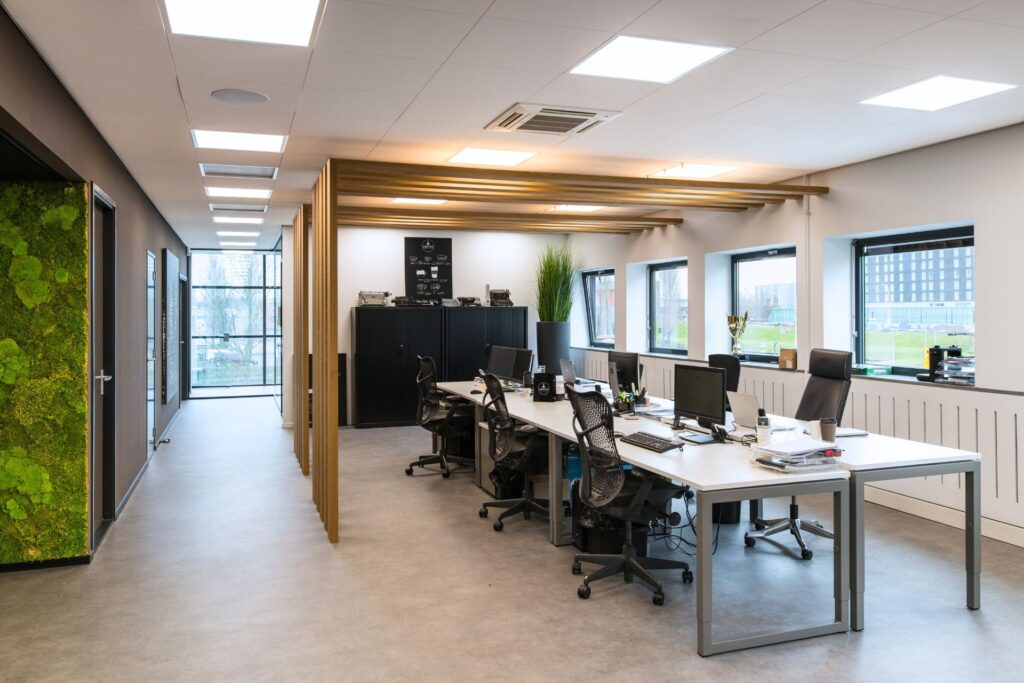
Employees no longer have their own desks. Instead, companies are increasingly turning to flexible workspaces. This means that employees choose a workspace that suits their tasks for the day. Does someone need to work in a quiet environment? A quiet zone is available. Is collaboration needed? There are large tables or project rooms.
Flexible workspaces not only save space, but also make offices more dynamic and interactive.
2. Custom meeting rooms
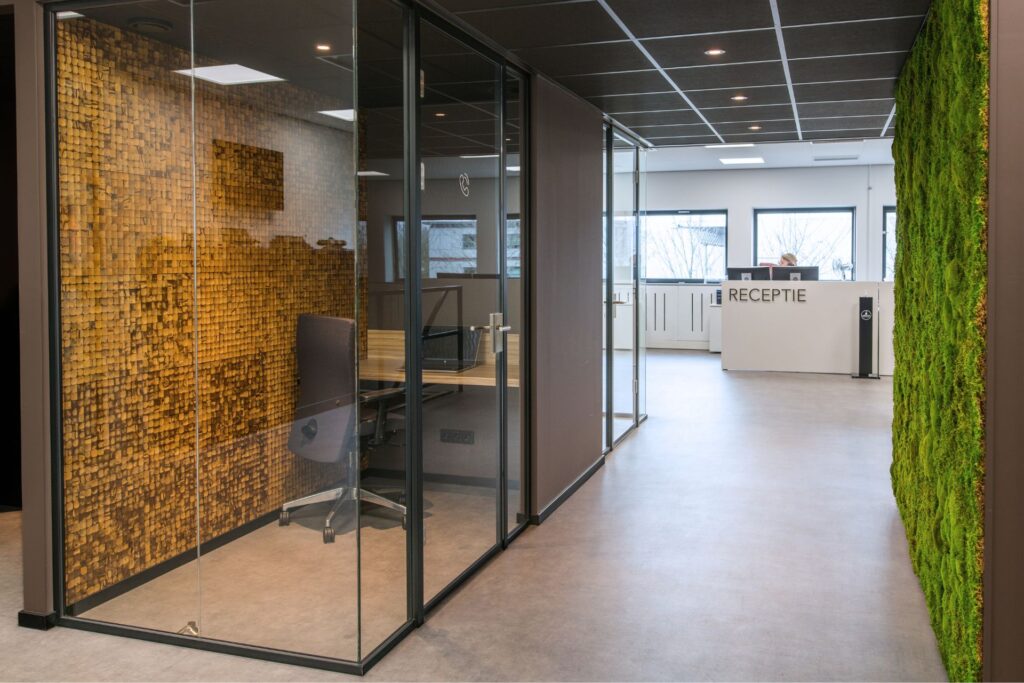
Since many employees are working from home, in-person meetings are less common. Nevertheless, collaboration remains essential. Modern offices are responding to this need by offering various types of meeting spaces. For example:
- Huddle rooms – small spaces for short meetings or video calls.
- Creative brainstorming spaces – equipped with whiteboards and flexible layouts.
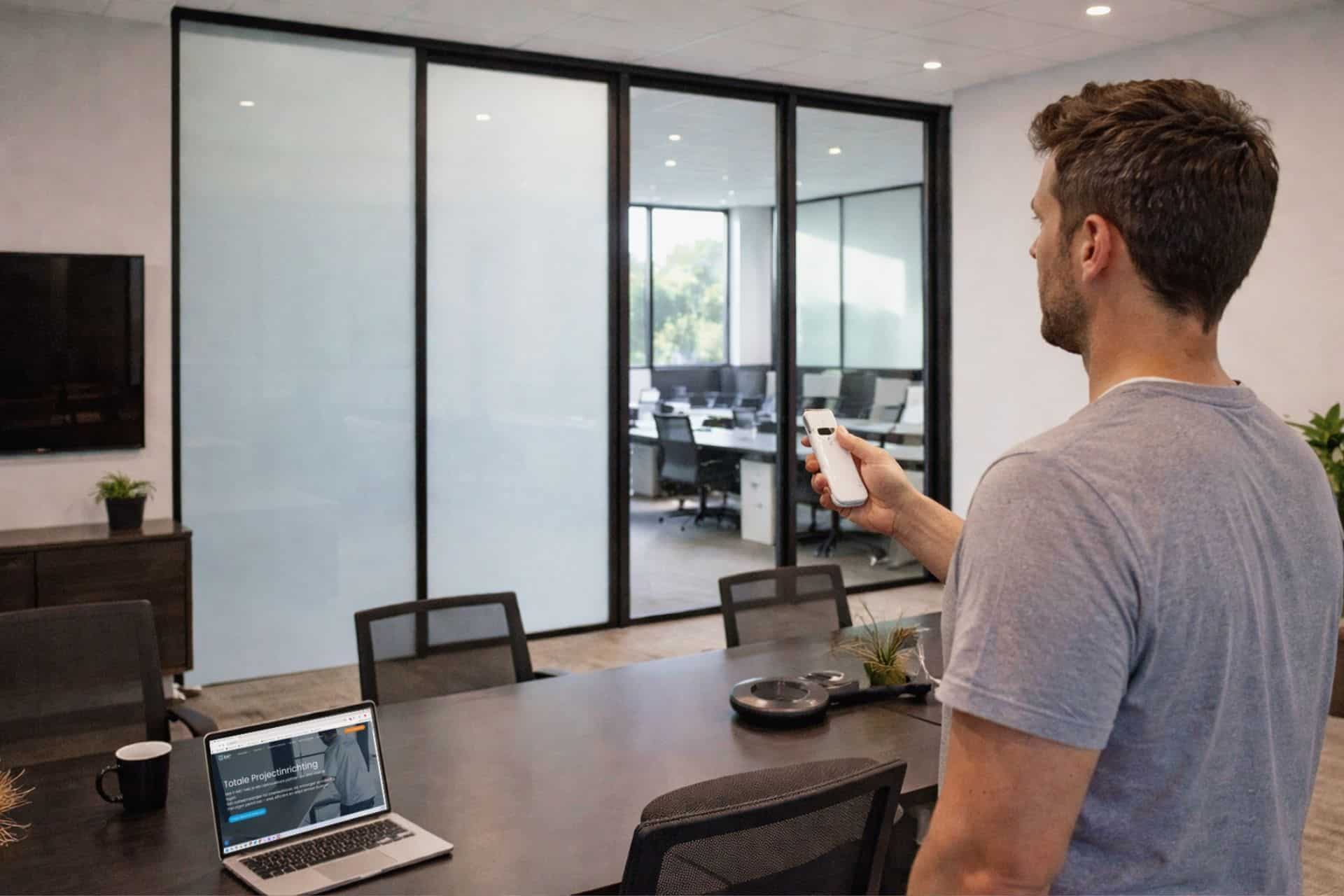
- Hybrid meeting rooms – equipped with state-of-the-art video and audio technology, allowing remote colleagues to join in effortlessly.
A smart mix of meeting rooms enables teams to collaborate more effectively, regardless of their location.
3. More opportunities for collaboration and social interaction
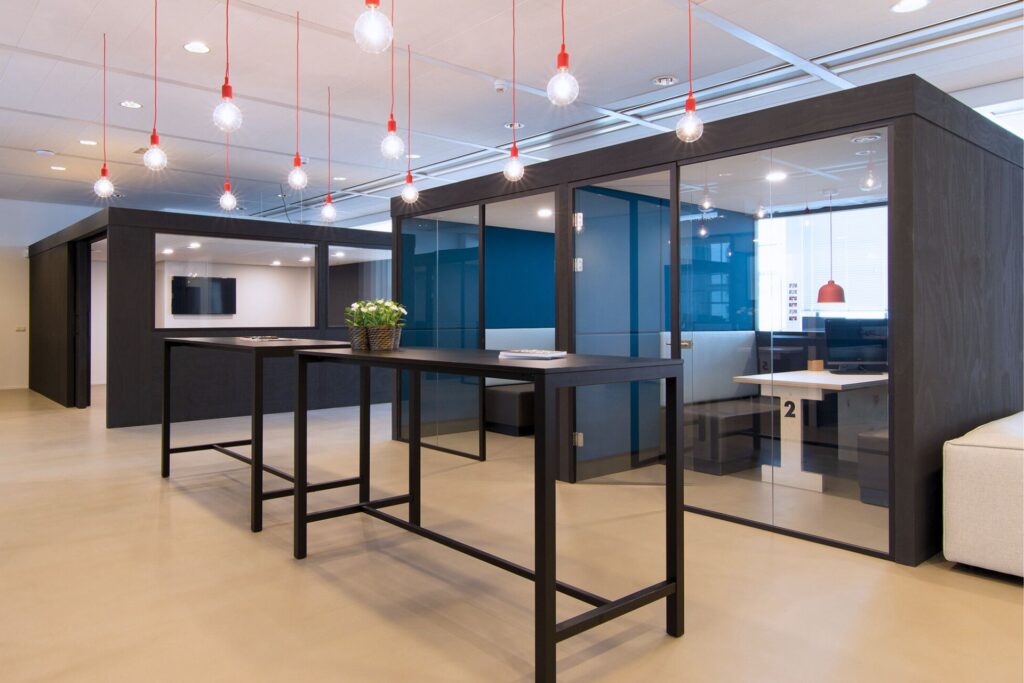
The office is increasingly becoming a place where people come together to exchange ideas and collaborate. This means that companies are investing in inspiring spaces for interaction. Lounge areas, open workspaces, and informal seating areas encourage spontaneous conversations and creative collaborations.
Employees no longer come to the office just to get work done, but mainly to connect with colleagues and feel a sense of belonging to the company.
4. Focus on acoustics and privacy
Open-plan offices have many advantages, but they can also cause noise disturbances. This problem is addressed with smart acoustic solutions. For example:
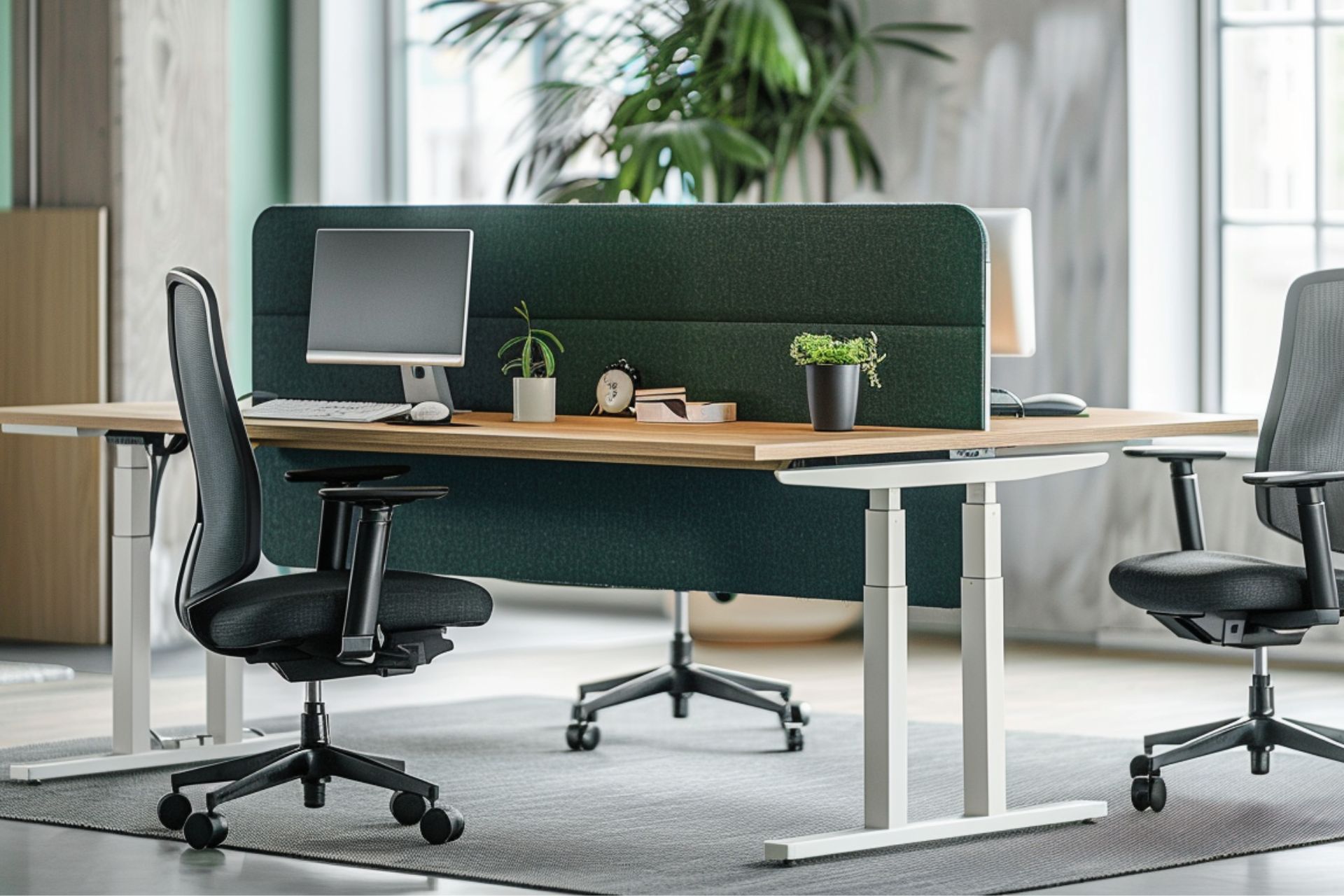
- Acoustic panels to reduce echo and noise.
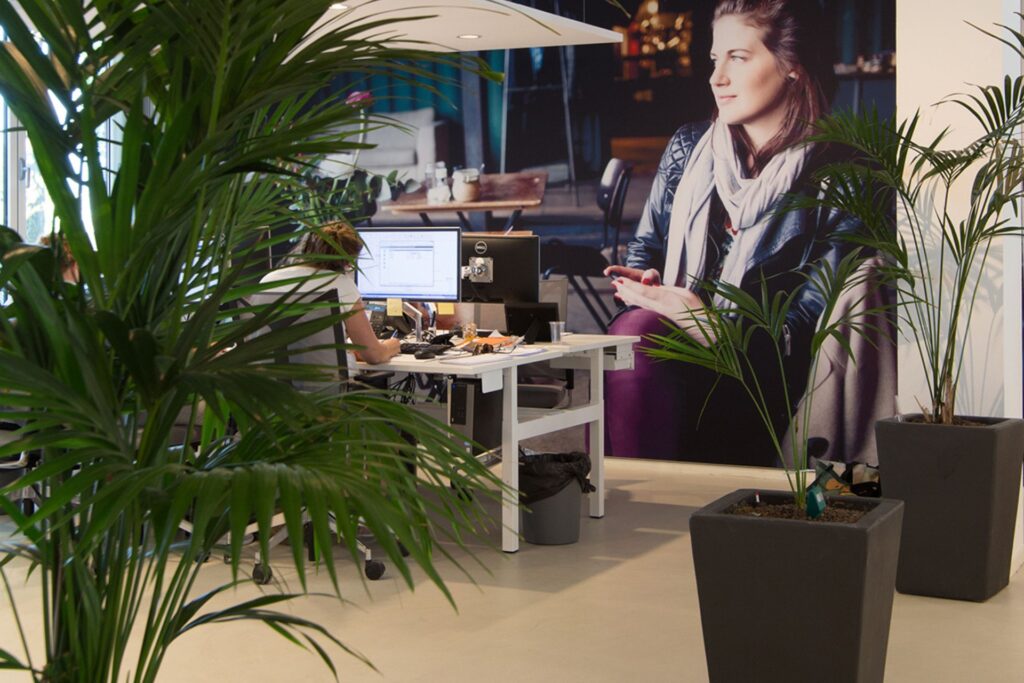
- Sound-absorbing materials such as carpeting and fabric walls or wall graphics.
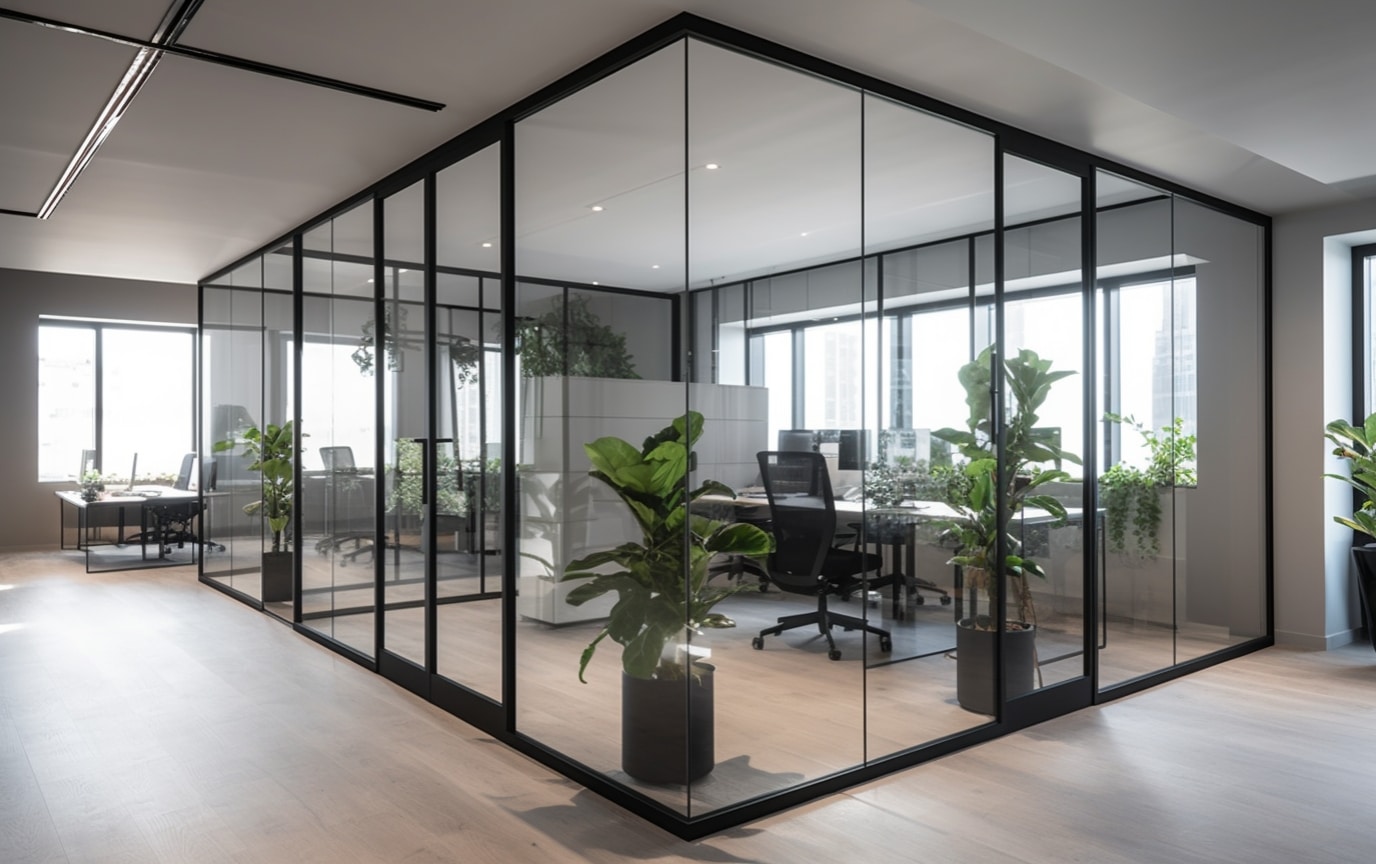
- Quiet pods where employees can briefly shut out their surroundings.
A good balance between open spaces and quiet workspaces ensures that everyone can work productively, regardless of their preferences.
5. Sustainability and technology as the standard
Sustainability is no longer just a trend, but a necessity. Modern offices are increasingly opting for circular furniture, energy-efficient lighting, and reusable materials. In addition, technology is playing an increasingly important role in office design.
Smart offices use:
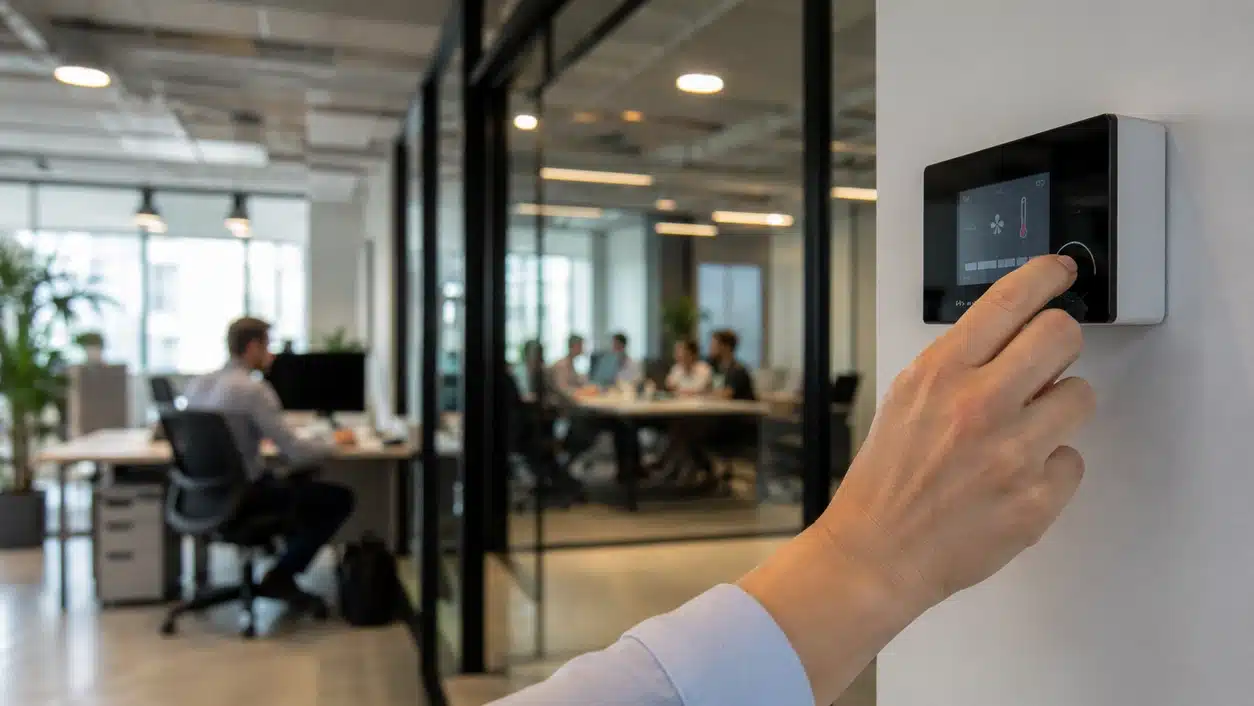
- Automatic climate control for a comfortable workplace.
- Occupancy sensors that help with efficient space planning.
- Wireless charging stations and smart desks that adapt to the user.
By combining technology and sustainability, companies are creating a future-proof work environment.
What will the office of the future look like?
The office of the future is no longer a place where employees are required to go, but an inspiring environment that fosters collaboration, creativity, and productivity. Companies that are adapting to hybrid work are investing in flexible workspaces, smart meeting rooms, and sustainable technologies.
Do you want to prepare your office for the future? Then it’s time to take a critical look at your current office layout and see what improvements you can make.
Want to learn more about hybrid office design?
Contact us and discover the countless possibilities for your hybrid workplace.